

Thailand's troubled political situation 'far from over'
The opposition Pheu Thai party is leading the way in forming a new government after its main rival, the Move Forward party, was denied its preferred candidate for a second time. However, the final formation of the Pheu Thai-led coalition has yet to be finalized.
Last week, the Constitutional Court postponed its ruling on a petition filed by the Office of the Ombudsman questioning the constitutionality of a parliamentary resolution preventing Move Forward's nomination. The court postponed the decision on the petition to August 19.
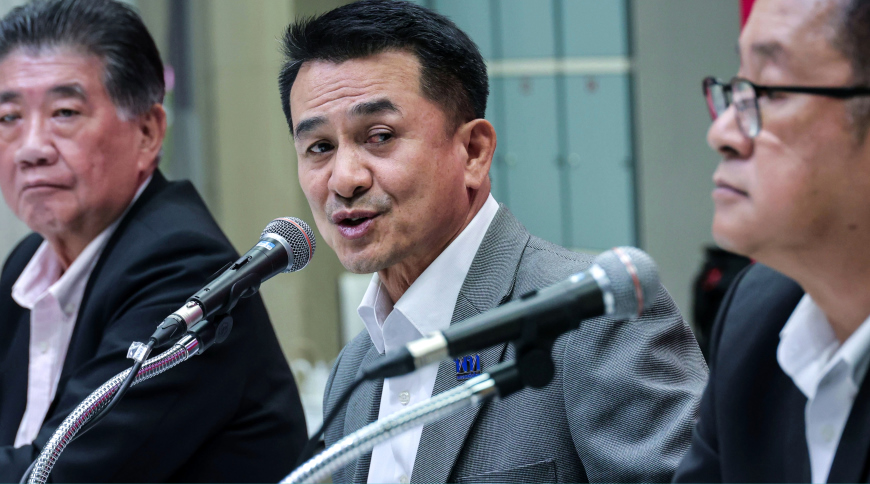
The next parliamentary vote on the Prime Minister's nomination, which requires a joint session of the House of Representatives and the Senate, had to be postponed. The vote cannot take place until the Constitutional Court determines whether it will accept the petition for consideration.
Adding to the parliamentary confusion, former Prime Minister Thaksin Shinawatra announced that he will not return to Thailand on Aug. 10 as promised. Thaksin, who has been in self-exile due to political turmoil, postponed his long-awaited return for another two weeks, citing deteriorating health.
Thaksin's eventual homecoming may depend on the success of the Pheu Thai Party in the race for prime minister.
According to political scientist Amorn Wanichwiwatana of Chulalongkorn University, the Pheu Thai Party's main motivation is to create conditions for Thaksin's return to Thailand after years abroad. However, Warawut Silpa-archa, leader of the Chart Thai Pattana Party, disagrees and argues that Pheu Thai is primarily focused on forming a stable government.
To form a majority coalition in parliament, Pheu Thai will likely have to join forces with former opponents - "military parties" such as Palang Pracharath and United Thai Nation. Pheu Thai has previously opposed these parties.

.jpg)
"Perhaps the roles in the cabinet have already been distributed among the parties," Dr. Wanichiwatana suggested, pointing to possible backroom deals.
Meanwhile, the Democrat Party risks internal instability if it supports a Pheu Thai-led government after historically opposing it.
Regardless of the outcome, political analysts warn that mass protests by factions unhappy with the new government are likely. However, Warawut Silpa-archa believes the demonstrations are unlikely to reach the scale of past political upheavals in Thailand.
Ultimately, the future fate of Thailand remains quite unclear. Until a new prime minister officially takes office, the country continues to dangle precariously in political limbo.
Author of the article: Ekaterina Antonova


