

Global Food Deficit: UN Focus on Sustainable Development and Food Security
The global food shortage is becoming an increasingly serious problem, and its consequences can be fatal for people's health. Providing enough food is an important factor in stability and peace, which is why the United Nations has identified food security as the second Sustainable Development Goal (SDG), aimed at eradicating hunger, achieving food security, improving nutrition and promoting sustainable agriculture.
According to the FAO Global Food Crises Report 2022, about 193 million people in 53 countries around the world will face food insecurity in 2022. This number increased by about 40 million compared to the previous year due to rising food prices. Rising food prices have particularly affected low-income countries, as food typically accounts for at least half of their total spending.
The World Bank also noted that a 1% increase in food prices pushes an additional 10 million people to the brink of extreme poverty. Therefore, it is extremely important to take measures to solve this problem and ensure the resilience and stability of the population of each country.
According to the Global Food Security Index (GIFS) 2022, which assesses the food security situation in 113 countries around the world, Thailand ranks 64th in terms of food security. Its score is 60.1 out of 100, which represents a marginal improvement over the previous year. In the Asia and the Pacific region, Thailand ranks 9th among the Pacific group countries and 15th among the middle-income countries, indicating a relatively favorable food security situation.
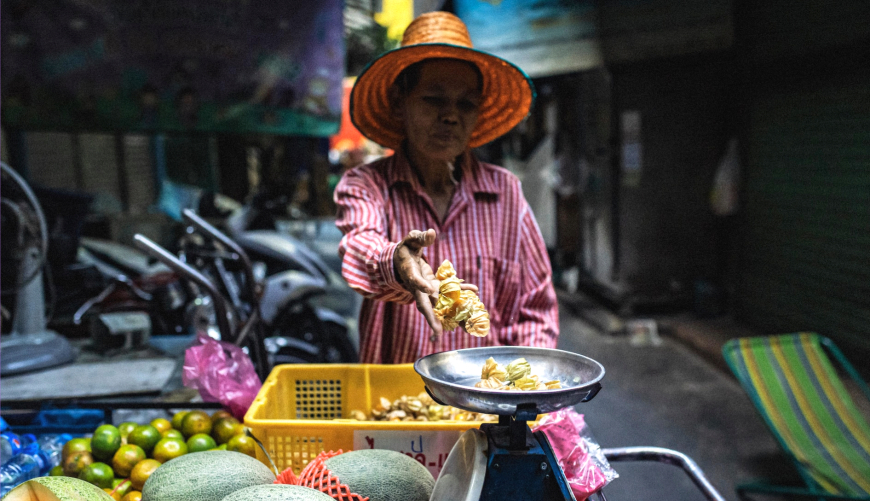
Despite this ranking, according to the FAO definition of food security, which includes four components: food availability, accessibility, use and stability, there are still serious problems in Thailand that need to be addressed. Here are the main issues that Thailand should focus on in its fight for food security:
Food Availability:
This requires an increase in food production in Thailand to ensure sufficient and consistent food supply. An indicator of this is the Self-Sufficiency Ratio (SCR), which indicates the proportion of food produced domestically compared to the total amount of food consumed in the country during the year. Thailand has achieved a QC of over 100% for the staple foods consumed by the majority of the Thai population, including rice, eggs, chicken, pork and farm prawns. In addition, Thailand can also export some food to generate income for the country.

Food availability:
This refers to the possibility of obtaining quality and nutritious food, reflecting the problem of hunger. According to the 2023 Global Hunger Index report, Thailand has a moderate level of hunger, ranking 53rd out of 116 countries. About 8.8% of the total population of Thailand, which is approximately 6.2 million people, suffer from malnutrition.

Use of food:
Use of food implies understanding and benefiting from food in accordance with the principles of proper nutrition, including the hygienic preparation of food. In Thailand, there is still a lack of knowledge, understanding and practices related to good nutrition, resulting in inadequate intake of important nutrients. According to the 2023 National Statistics Office Health Behavior Survey, 22.5% of the Thai population prioritize taste over food when eating.

Stability of food supply:
This refers to the ability to obtain enough food even during crises without the risk of food shortages. Global economic conditions driven by climate change have a significant impact on the stability of food security. Thailand has developed systems to manage food and water emergencies, disaster prevention, warning, mitigation and the promotion of sustainable agriculture. In addition, self-reliance at the family and community levels plays an important role in ensuring access to food and water during various crises. The impact of the Covid-19 pandemic on food security in Thailand has not been strong due to the important role played by communities.
According to the 2022 National Statistical Office Study on the Impact of the Covid-19 Pandemic on Households in Thailand, households faced food-related challenges such as limited food choices and inadequate intake of nutritious and wholesome food. Low-income households experienced more severe food problems across all dimensions than high-income households.
While Thailand currently has enough produce to meet the needs of the population, there are challenges and constraints going forward in terms of food production and stability. Supporting sustainable agriculture, investing in innovation, raising public awareness of good nutrition and making food accessible to all segments of the population are important steps in the fight against food insecurity in Thailand.

Author of the article: Ekaterina Antonova


